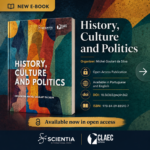
Scientia International Press is expanding access to multilingual research publishing through special journal APC terms, publication in English, Portuguese and Spanish, and clearer guidance for scholarly work in sign languages, Indigenous languages and other modalities. Researchers can now consult the updated instructions across all 11 journals and the book and chapter portal.
Journal APCs: a full waiver or €150 under the 2026 terms
Each journal’s volume 1, issue 1, has a full APC waiver. From volume 1, issue 2, articles accepted by 31 December 2026 have a basic Article Processing Charge of €150 instead of €450, a reduction of 66.7%. Eligibility depends on acceptance by the deadline; submitting before that date alone does not qualify an article.
Submission is free, rejected manuscripts incur no charge, and payment is requested only after acceptance. Scientific assessment is independent of fees, discounts and waivers. Optional services and applicable taxes are additional. Read the complete APC policy and conditions before submitting.
Trilingual articles and metadata in six languages
The basic article service includes machine translation for publication in English, Portuguese and Spanish, with authors reviewing and validating scientific meaning and terminology. Titles, abstracts and keywords are prepared in English, Portuguese, Spanish, French, German and Mandarin Chinese. This metadata coverage does not mean six full-text translations.
Accepted articles receive individual DOIs and are published in open access under CC BY 4.0. The journals use open peer review, with identified reviewers and published reports under their editorial policies. Publication remains subject to scholarly quality, research integrity and editorial acceptance.
Libras, Indigenous languages and multimodal scholarship
The updated guidance welcomes scholarly work in Libras and other sign languages, academic video articles, sign writing such as SignWriting, and Indigenous, minority or oral languages. These modalities can communicate rigorous research across the journals’ respective disciplines and the publisher’s chapter calls.
The complete original work and a complete written version in English, Portuguese or Spanish must be submitted together at the initial submission. A translated title, abstract or partial transcript does not replace the full written counterpart. For oral work, include the complete recording and corresponding written version.
Authors should identify the language and community, credit translators or interpreters, and identify who validated correspondence between the versions. Provide references, clear audiovisual materials and relevant captions, transcripts or other accessibility resources. Machine translation alone is insufficient to validate sign-language content.
Both versions belong to one submission in the same account. Select the written-version language in the interface and state the original language and modality in the comments to the editor. Screening checks scope, technical suitability and the availability of reviewers with appropriate subject and language expertise. Original modalities may accompany publication where technically and editorially feasible; submission does not guarantee acceptance.
Choose the journal that fits your research
Each journal has its own scientific scope. Read its current call and author guidelines before selecting an article category:
- Scientia International Journal for Linguistics, Letters and Arts
- Scientia International Journal for Social Sciences
- Scientia International Journal for Human Sciences
- Scientia International Journal for Education
- Scientia International Journal for Interdisciplinary Research
- Scientia International Journal for Biological Sciences
- Scientia International Journal for Agricultural Sciences
- Scientia International Journal for Earth Sciences
- Scientia International Journal for Engineering
- Scientia International Journal for Exact Sciences
- Scientia International Journal for Health Sciences
What changes for book chapters and complete books?
The paired-submission policy also applies to scholarly proposals submitted to Scientia International Press. Original-language or multimodal files and the complete written counterpart should accompany the same submission. Chapter authors begin on the relevant call page and follow editorial communications through that account.
Each chapter call retains its own scope, authorship requirements, deadlines, review arrangements, publication languages, services and fees. The journal APC promotion does not automatically apply to book chapters or complete books. Complete books require their own editorial assessment and proposal.
Explore current chapter calls and Open Books areas · Read the book and chapter submission guidelines · Read the publisher’s multimodal submission announcement
Prepare one complete submission
- Choose the journal or chapter call that matches the work’s scientific contribution.
- Read its guidelines and use the relevant manuscript template.
- Prepare the full original work, the written counterpart where required, references and ethical declarations.
- Submit all components through the selected portal and follow the editor’s messages there.
These changes aim to make scholarly communication more accessible across languages and modalities while keeping the editorial process clear and scientifically rigorous.